Ch 9-3: Missionary Persecution in the Final Days
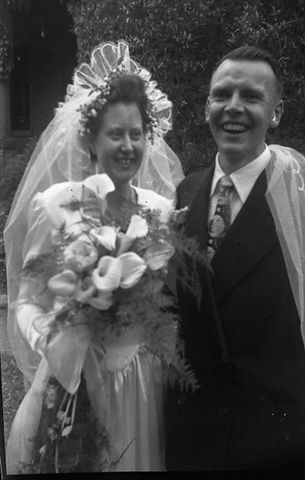
In April of 1947, Rev. Arthur Dayfoot and Bessie Margueritte Julien were one of the last missionary couples to be married in Sichuan. Two years later, their marital bliss was interrupted by the People’s Liberation Army occupation of Chengdu on December 26th, 1949. Bessie Dayfoot, a medical missionary, looked back on the period of CCP rule from forty years later in a 1990 memoir:
Between the time when the Communists took over our area and we left for Canada, the soldiers were swarming all over our Mission Compound. Some were billeted in the hospital and some lived in our house. … It was a stressful time. The soldiers drilled and marched daily in our yard, singing their propaganda songs. Cathy [Dayfoot’s daughter], at the ripe old age of almost two, had learned them all and sang them all the way home to Canada – but with one little addition of her own: a big long Presbyterian “A-men” at the end (quoted in Dayfoot’s obituary, https://www.ducc.ca/inmemorium/2013/03/17/bessie-julien-dayfoot/).
Dr. Leslie Kilborn went on to describe these searches in minute detail. The Committee members were seeking anything “suspicious,” which included virtually anything of foreign origin. The items they found most suspicious were a pair of “ancient Italian dueling pistols” and a German revolver owned by Dryden Phelps, an ardent supporter of the Communists who had, somewhat surprisingly, also been appointed as Acting US Consul in Chengdu (Munro 1990, 205). Given these imperial ties, possession of these weapons “was taken to indicate possible connection with the anti-revolutionaries” (Kilborn n/d, 7). His residence permit was revoked, and he was put under house arrest for eight months while waiting for his exit permit. Kilborn suspected that Phelps’s well-known political sympathies saved him from a prison sentence. Phelps was known for his unbounded optimism and cheerful disposition in the face of obstacles, even smiling at the entrance to the bomb shelter near his home on the WCUU campus a few years earlier. He has left no record of his thoughts or feelings during his confinement and subsequent deportation, although we can speculate that it was a bitter blow to his faith and worldview.
Calvin Bright was less fortunate. He was a second-generation missionary, born in Shanxi, who had come to Chengdu in the great westward migration to escape Japanese occupied territories during the war. He had taken a curatorial role at the WCUU museum. He was arrested a few days after Phelps, grilled in an overnight questioning session, and jailed for four or six months (Kilborn n/d, 8; Munro 1990, 252, 264). A Chinese co-worker had accused him of stealing Chinese cultural heritage. However, there was neither hearing nor trial, so no evidence was ever given. A year later, the CCP accused the co-worker of stealing the same items, so Leslie Kilborn concluded that the co-worker had probably stolen the items (Kilborn n/d, 8).
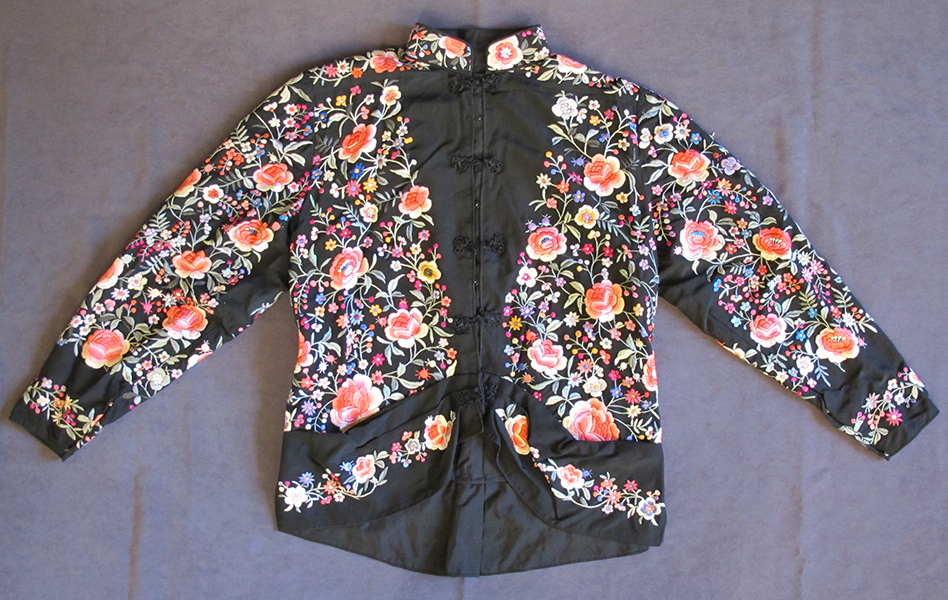
But accurate information was difficult to obtain or ascertain in those days and rumors were flying. Judith Outerbridge Walker, a girl of ten at the time, recalls that Bright agitated the CCP by cutting up embroidered robes, making them into tailored women’s jackets, and selling them to support the museum (JOW Interview 2022-06-7). This was a general practice among missionary women in which Bright may have participated (Willmott 2012, 161-163). After the CCP takeover, these robes were available from itinerant “curio men” at dirt cheap prices (Earl Willmott, MOA Interview). Both interpretations could be true at once, but we will never know if any museum items were stolen, and if so, by whom. When Bright was released, he was taken out of Chengdu by a military escort and deported (Munro 1990, 252, 264).
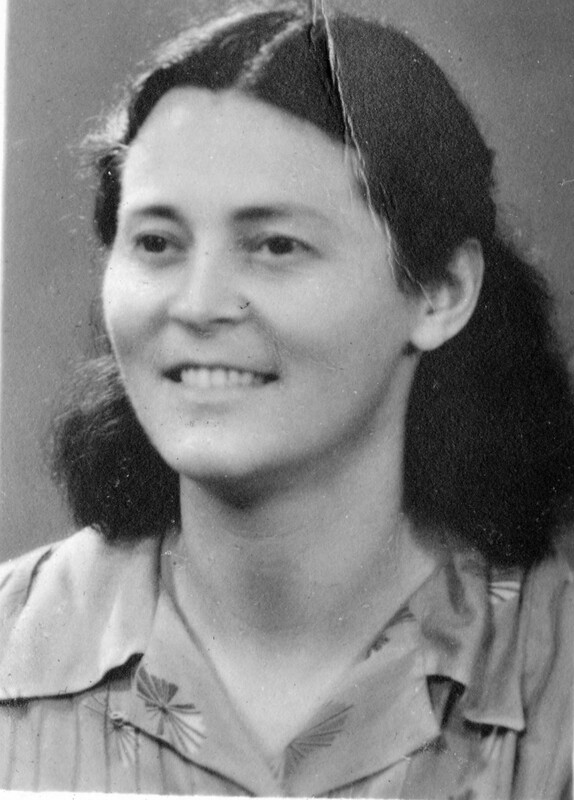
If a missionary were suspected of being a spy, he or she would not receive an exit permit. Such was the fate of Katherine Hockin and her housemate Evelyn Ricker. Looking back, Hockin wrote:
Sometimes we were tempted to think of all this in terms of heroic martyrdom, but we soon came to realize that what was in question was not our faithfulness to the Lord but the memory of some affront when we’d lost our tempers or been unfair, as well as a re-evaluation of the whole context of the century of unfair treaties, in which we were inescapably involved (Hockin 1988, 26).
Cooped up under house arrest for months, they were no longer able to teach at the girls’ school, so they played cards at home and read the proliferating political pamphlets from the Communist authorities to learn more about their Chinese colleagues’ views.
Two missionaries suffered long term imprisonment and survived to write memoirs of their captivity – Dr. Stewart Allen, a Canadian, and Rev. Olin Stockwell, an American (Allen 1995; Stockwell 1953). Neither Allen nor Stockwell knew what they were accused of. Allen (1994) was imprisoned for thirteen months until he confessed to certain minor “crimes” against the CCP. His daughter, Phyllis Allen Donaghy (Interview 2022), recalled that, during this time, there was no word of his whereabouts or even whether he was dead or alive. Ironically, in 1946 he had been given assurances by Zhou Enlai that foreign doctors would be welcome in Communist China, and he had been a strong Communist supporter before his arrest (Munro 1990, 238). He found to his great regret that his confidence was misplaced.
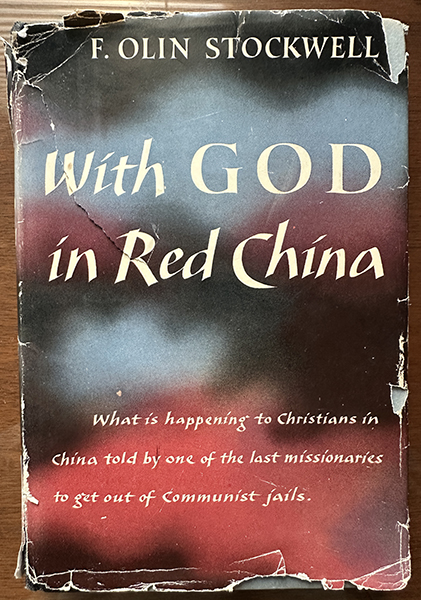
Link to With God in Red China on Internet Archives
Olin Stockwell (1954, 202, 229) was detained for fourteen months, having been moved from Chongqing City to “Happy Valley,” the prison and torture facility formerly run by Chiang Kaishek’s general, Dai Li. While imprisoned, Olin passed the time by writing his memoirs in the borders of a bible that Stewart Allen had given him before he was transferred. Olin finally realized that he would have to concoct a fake confession to regain his freedom because his interrogators would not accept a plea of innocence. Meanwhile, his wife Esther was under house arrest and stripped of all possessions and access to food and money. When she was finally allowed to leave, she spent a year in Hong Kong waiting for Olin to join her. When, in September 1952, her son Foster wrote begging her to return to the US, she took a ship to Los Angeles and then a train to Chicago to be reunited with him, her sisters, and brothers-in-law (Stockwell 1980, 146-148). In November 1952, Esther received a wire from Olin that read: “HAVE COMPLETED LIFE’S MOST DIFFICULT, REWARDING EXPERIENCE, Romans 5:3-5, OLIN.” Remarkably, Olin was of such character that his imprisonment deepened his faith. It was not long before the couple were to continue their missionary careers in Singapore.